Cyber risk is no longer just a technology issue — it’s a business, governance,and leadership challenge. As regulatory scrutiny increases and digital dependency grows, boards and executives are being held accountable for how information risk is identified, managed, and communicated. This is where ISO 27001 plays a critical role. ISO 27001 is the leading international standard for information security, providing organizations with a structured, auditable, and risk-based framework through an Information Security Management System (ISMS).
ISO 27001 Through a GRC Lens
From a Governance, Risk, and Compliance (GRC) perspective, ISO 27001 brings discipline and clarity to how organizations manage information risk.
It helps organizations:
Establish clear governance structures and accountability
Align security objectives with enterprise risk management
Demonstrate compliance with regulatory and contractual obligations
Create traceability from risk → control → performance
Support assurance activities such as audits and regulatory reviews
Rather than operating as a standalone security initiative, ISO 27001 integrates directly into the broader risk and governance ecosystem.
Why Executive Leadership Should Care
ISO 27001 explicitly requires top management involvement. This is not accidental.
Executives and boards are expected to:
Set the strategic direction for information security
Approve and sponsor the Information Security Policy
Ensure adequate resources and funding Assign clear roles, responsibilities, and accountability
Review ISMS performance and drive continual improvement
In other words, ISO 27001 embeds cyber and information risk into executive decision-making, where it belongs.
The CIA Triad: A Business Risk Perspective
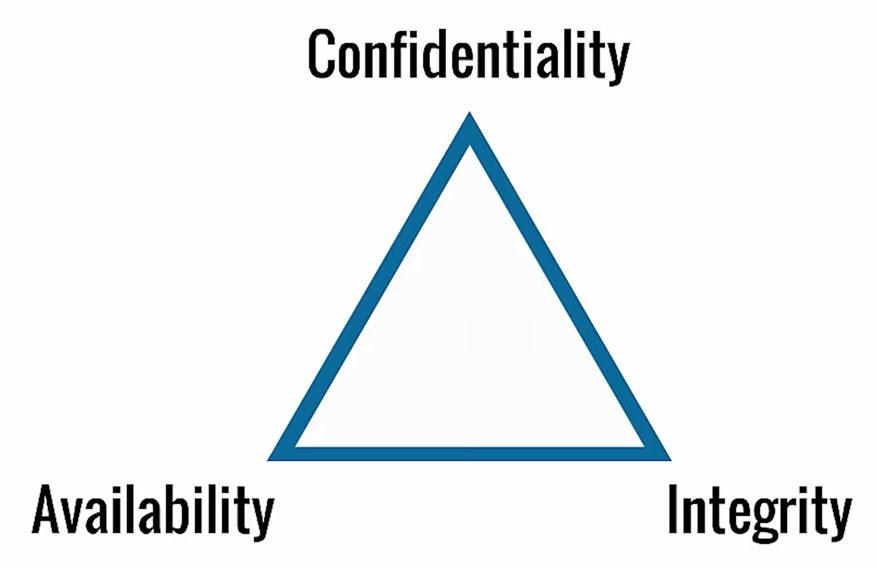
The three core principles of ISO 27001 map directly to business risk:
Confidentiality Protects sensitive customer, employee, and intellectual property data — reducing regulatory exposure and reputational damage.
Integrity Ensures accurate and reliable information for decision-making, financial reporting, and operational execution.
️ Availability Supports business continuity, operational resilience, and service delivery. Failures in any of these areas are not just technical incidents — they are enterprise risk events.
ISMS as a Governance Framework
An ISMS is not a technical control set; it is a management system.
From an executive standpoint, it:
Defines how information risk is owned, managed, and escalated
Standardizes policies, processes, and decision-making
Enables cross-functional alignment between IT, Security, Legal, Risk, and Operations
Preserves institutional knowledge and reduces key-person dependency
This structure is especially valuable for growing and complex organizations.
Risk-Based Decision Making at the Core
ISO 27001 is grounded in risk-based thinking, which aligns directly with enterprise risk management practices.
Leadership teams are expected to:
Understand key information risks
Determine risk appetite and tolerance
Approve risk treatment decisions
Accept residual risk knowingly
Controls are not implemented “because the standard says so,” but because they are appropriate responses to business risk. These decisions are documented transparently in the Statement of Applicability (SoA).
Controls That Support Governance, Not Just Security
The ISO/IEC 27001:2022 standard defines 93 controls across four categories:
Physical controls – protection of assets and facilities
Technological controls – system and data safeguards
From a GRC standpoint, these controls provide evidence, consistency, and assurance.
Compliance, Certification, and Assurance
Compliance means meeting the standard’s requirements internally.
Certification provides independent, third-party assurance to stakeholders.
For boards, customers, and regulators, ISO 27001 certification serves as a credible signal of maturity and due diligence.
It also strengthens responses to:
Regulatory inquiries
Customer security questionnaires
Supplier risk assessments
Is ISO 27001 Mandatory? Practically Speaking—Yes.
While ISO 27001 is not legally mandatory in most jurisdictions, it is increasingly:
Required in contracts and RFPs
Expected by regulators and auditors
Used as a benchmark for “reasonable security”
In many industries, ISO 27001 has shifted from optional best practice to baseline expectation.
ISO 27001 Within the Broader GRC Ecosystem
ISO 27001 does not exist in isolation. It aligns closely with.
ISO/IEC 27002 – control implementation guidance
ISO/IEC 27005 – risk management
ISO/IEC 27017 & 27018 – cloud security and privacy
ISO/IEC 27031 – ICT resilience and continuity
Together, these standards support integrated risk management, compliance, and resilience.
Final Thought for Leaders
ISO 27001 is not about “passing audits.” It’s about governance, accountability, and informed risk-taking.
For executives and boards, it provides a common language to discuss cyber and information risk — and a defensible framework to show that those risks are being managed responsibly.
In today’s environment, that’s not just good security. That’s good governance.