AI is here. AI is there. AI is everywhere. AI is powerful — but with power comes responsibility. The latest released NIST AI Risk Management Framework (AI RMF 1.0) is a game-changer for organizations building or using AI. It goes beyond compliance—it’s about embedding trust, transparency, and accountability into every step of the AI lifecycle.
Key points from the NIST AI Framework:
Purpose: AI RMF is a voluntary framework designed to encourage responsible AI development and use, enhance trustworthiness, and foster public confidence.
AI Risks: Unlike traditional software risks, AI risks stem from evolving data, complex contexts, and societal dynamics. Potential harms include bias, lack of transparency, privacy violations, and system failures with broad societal impacts.
Trustworthines s Characteristics: A trustworthy AI system should be:
Valid and reliable
Safe
Secure and resilient
Accountable and transparent
Explainable and interpretable
Privacy-enhanced
Fair, with harmful bias actively managed
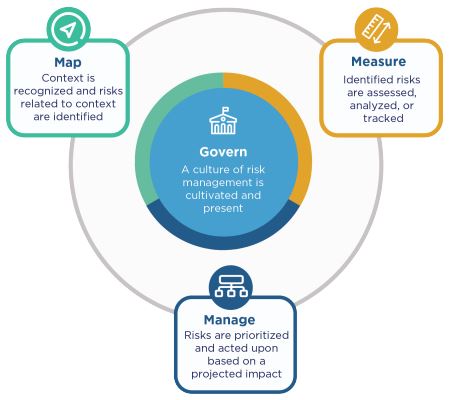
Framework Core Functions (the “four pillars”):
Govern – Establish organizational structures, policies, and accountability for AI risk.
Map – Contextualize risks by understanding intended use, potential harms, and stakeholders.
Measure – Assess and monitor AI system performance, risk, and trustworthiness.
Manage – Prioritize and act on risks throughout the AI lifecycle
Profiles: Organizations can adapt the framework to specific use cases, sectors, or missions, ensuring flexibility while maintaining consistent principles.
Human-Centric Emphasis: AI RMF stresses social responsibility, sustainability, and professional accountability to align AI with societal values.
Conclusion
The NIST AI RMF 1.0 is not a compliance checklist but a flexible, risk-based guide that balances innovation with responsibility. By embedding governance, transparency, and fairness into AI design and deployment, organizations can harness AI’s benefits while safeguarding against harm. Ultimately, the framework seeks to cultivate trustworthy AI systems that serve both organizational goals and societal well-being